


1860
At the end of September, after his resignation as chaplain, De Smet travels to Europe for the twelfth time. He has a fixed scenario for his performance in the old continent. Well in advance the newspapers are informed of his arrival. As a result the press pays extensive attention to the missionary's destination. This is followed by a determined begging tour through Belgium and other European counties. The Netherlands, France, Italy, Germany, England and even Ireland are scheduled. He visits the families of his colleagues. This is followed by a few wealthy benefactors and church leaders. And then it's the turn of education. De Smet performes in colleges, boarding schools and seminaries. Even primary education is not forgotten. In the nuns' schools, the stories about the conversion of the wild Indians are a popular item.
In November, De Smet stays with his family in Grembergen near Dendermonde where his older brother Charles has died and is buried.
Meanwhile, Congiato, Gazzoli and Hoecken complain to Father Felix Sopranis that De Smet's last visit to the Indians has not only evoked old memories but also new expectations. De Smet promises the Indians a lot and we just have to see how we can make it happen! Father Giorda even asks Beckx why, as the person responsible for the mission in Oregon, he does not have direct access to the funds that De Smet collects on their behalf. Despite the criticism, Beckx maintains that De Smet can use the collected money a he wishes. The missionary not only wants to make the purchases, he also wants to accompany the goods on their long journey through the North American continent on Charles Chouteau's transport ships. That transport is free, because Chouteau is a former student of De Smet!
1861
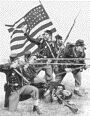
At the end of March, De Smet will return to the U.S. This time he makes the crossing on the Fulton. The crossing by steamship takes 14 to 16 days, twice as fast as the sailing ships. The duration of the crossing is also more regular, because it is less dependent on the wind. De Smet thus arrives in New York harbor during the night of 14 to 15 April. He has 12,000 dollars (66,000 francs) in his pocket. But the country is in turmoil! For the first time, the election of a president (Abraham Lincoln) poses a serious threat to the unity of the United States. South Carolina is the first to leave the Union, and on April 12, in Charleston harbor a cannonade starts the American Civil War. On April 17, De Smet leaves for St. Louis, where he arrives on April 19. From now on, all forms of transport and communication will be strictly controlled. Citizens suspected of treason are imprisoned without trial. There is hardly any freedom left.
Technically, communication between East and West has improved a lot. There are stagecoaches and the telegraph takes over the work of the Pony Express. But life remains hard and lonely for the missionaries in the mountains of the Northwest. After the long winter months in the Rockies, they eagerly await the first news from the east each year. De Smet knows this all too well, and he makes sure that the shipment he sends to the missionaries in spring contain enough books, photos, news, and information. This year too, De Smet would like nothing more than to accompany the shipment, but due to the death of the provincial, father Druyts, that is impossible this time. However, the mail and the precious cargo (a mill, plows and other tools) will never reach their destination because the transport ship goes up in flames along the way.
Despite the threat of war, De Smet visits Baltimore, New York and Washington D.C. In the latter city, on 18 July, he witnesses the disorderly retreat of the Unionists after their ignominious defeat at Bull Run.
De Smet writes letters to his brother-in-law, Charles Van Mossevelde, which show that De Smet largely shares President Lincoln's point of view. But at home, in Missouri, the Jesuits are caught between two fires. In St. Louis, De Smet is completely silent on political issues. The frontline runs right through the state of Missouri. The Union has occupies the northern part of Missouri, but most Missourians sympathize with the Southerners. Southern Missouri is controlled by rebels who regularly invade neighboring Kansas and northern Missouri. Many murders are committed in St. Louis itself. On the Mississippi, traffic with the south has become impossible, leaving hundreds of ships floating idly along the wharf. Many factories, warehouses, shops and houses are abandoned. 40,000 residents leave St. Louis and many young men enlist in one of the two armies. The schools are emptying and so the Jesuits get into trouble for the umpteenth time. The Bureau of Indian Affairs still owes the Kansas missions $15,000.
1862
In January, De Smet will travel to Washington D.C. to plead for payment of the overdue subsidy. He has a meeting with President Lincoln to convince him. De Smet gets his way. In the capital, he also dines with the Russian, Spanish, French and Belgian ambassadors (Blondeel Van Cuelenbroeck).
After 13 years, De Smet is relieved of his assignment to assist the Provincial. Finally he has more time for the Indians. De Smet is determined to start up the promised mission with the Sioux. In May, he sails from St. Louis to Fort Benton on Captain Charles Chouteau's Spread Eagle. On the ship he enjoys the company of Samuel Latta (Indian agent for the Upper Missouri area), Henry Reed (agent for the Blackfoot), and Lewis Morgan (anthropologist). On May 22, they approach the Niobrara River near a settlement of the Yankton Sioux. A day later they reach Fort Randall, the new military stronghold along the Missouri. A group of Ponca Indians live there. On May 27, they arrive at the mouth of the Bad River at the old Fort Pierre. On June 9, they meet the first Assiniboin and Crow Indians at Fort Union. Above Fort Berthold there is a dangerous race between Captain Joseph La Barge with the Emilie and Edwin Bailey with the Spread Eagle. Fortunately, the Spread Eagle arrives unscathed at Fort Benton on June 20 and De Smet is able to personally deliver the goods for the St. Peter mission to Fathers Giorda and Immoda. After 17 years of missionary work, Father Adriaan Hoecken has returned to the East. In the meantime, De Smet has heard that things are rumbling among the Indians in the vicinity of Fort Pierre. The dispute is between the Indians who want to accept the gifts of the whites and those who don't want to depend on them. There have already been deaths. In addition, the Sioux hunt all whites who come to Montana to look for gold. Reportedly, the Indians even attack the transport ships on the Missouri. De Smet abandons his original plan to convert the Sioux for the time being and on July 6 he hastily returns with the Shreveport from La Barge to St. Louis. For the Indians, a transport ship on the Missouri is easy target. De Smet knows this, he experiences such an attack first hand: with a hail of bullets and arrows, the Indians are able to stop a ship on the Missouri. A week later, near Fort Pierre, they learn that Bear's Rib, a friendly Sioux chief, has been killed because he has accepted the annual rations from the Sioux in defiance of the opposition. De Smet disembarks at Fort Leavenworth to visit the St. Mary mission in Kansas.
When De Smet arrives in St. Louis, he learns that the Santee Sioux of Minnesota have revolted en masse on August 18. In less than 3 days they killed a thousand unsuspecting peasants. But the sudden resistance of their leader, Little Crow, becomes a tragedy for all the Native Americans of Minnesota. General Sibley disperses the rebellious redskins and in September a large number of mostly innocent Indians are captured. For the whites it is clear, it will never be quiet again befor all those unreliable and cruel savages are locked up in reservations. De Smet asks the American government not to hang the condemned Indians, but that happens anyway in December, with the result that the hostilities resume. For a while the Sioux make transport via the Missouri River impossible.
At the end of August, De Smet will visit Washington D.C. and some cities in the east. On September 17, he witnesses the battle of Antietam.
In Idaho, gold is found in Kootenai territory. This comes as no surprise to De Smet. He has known for twenty years that gold dust can be easily found in the small mountain streams, but he has deliberately concealed this knowledge. As in California, the invasion of the gold miners is disastrous for the local Indian communities.
1863
In March, it appears that the Union war machine needs more and more soldiers. All men between the ages of 18 and 45 are drafted through a Draft Act, including the clergy. De Smet appeals to the republican politician Thurlow Weed to intervene. Until the end of the civil war, there is a tacit agreement with the government that the Jesuits can follow their conscience. Some of them become chaplains to help bear the suffering of the faithful soldiers.

July 4 is Independence Day. The national holiday must be celebrated despite all diffilculties. The whites fire their guns, but some Indians in the neighborhood interpret these expressions of revelry completely differently. They return fire, wounding 2 whites. To make matters worse, 600 warriors on horseback suddenly appear. De Smet wants to do something to prevent further violence. He walks towards the Indian horsemen. Fortunately, one of the leaders recognizes the Great Black Robe. It is the son of Red Fish, an Ogallala Sioux. In 1848 De Smet had prayed for the rescue of his imprisoned sister. After an hour of talking back and forth, De Smet can convince de Ogallala that it is all a misunderstanding.
The wagons from Fort Benton take a full month to arrive. The transport will not show up until July 30. It then takes another two weeks for the caravan to reach the small town near Fort Benton. On August 15, Father Cammillus Imoda can finally shake hands with Sinterklaas (Santa Claus is De Smet's nickname among the Jesuits). De Smet has to rest for a few days. Contact with a poisonous ivy plant has caused him a nasty skin irritation. De Smet then travels with Father Imoda, the young Italians and doctor Martin to St. Peter's mission, which is 120 kilometers away on the Sun River. There, Fathers Giorda and Imoda established a good reputation among both the Blackfoot and the white settlers.
The journey through the country of the Sioux remains very dangerous. There are reports of armed conflicts and massacres everywhere. Even on the Missouri it's not safe anymore. The Robert Campbell is attacked just north of Fort Pierre. Other ships are also shot at, with the result that a number of crew members cannot recount their journey on Missouri. For De Smet, this is a good reason to move further west. He wants to travel to Fort Vancouver with Dr. Martin and some Indian guides. On August 25 they use the newly built Mullan Road (MR) to St. Ignatius. The construction of this 1,000 kilometer long road took 7 years. In fact it is a military road (MR does not stand for Military Road). A large part of it was designed by Captain Mullan before the Civil War. The highway connects the last port of call on the Missouri, the Fort Benton trading post, with the town of Walla Walla on the Columbia River. On the way, De Smet visits Father Joset and Brother William Claessens in Hell Gate (near Missoula, Montana). They are building a new church for the white people. He later runs into Father Joseph Giorda, he is on his way from St. Ignatius to St. Peter. Ten days later they arrive in St. Ignatius. After the Treaty of Hell Gate (1855), Mission Valley became home to a number of confederate tribes, such as the Flathead, the Kootenai, the Kalispel, and the Pend d'Oreille. In the meantime, Father Hoecken was succeeded by the Italian Father Grassi. On September 8, they move from St. Ignatius to Sacred Heart, the mission of the Coeur d'Alênes. On the way, they run into a forest fire. On September 18, they reach Sacred Heart. They stay five days with Fathers Gazzoli and Caruana, Joset's successors. On September 23, they travel by canoe to the southern shore of Lake Coeur d'Alêne, to follow a trail to Walla Walla City. They arrive in the farming community of Walla Walla on October 1. It is unbelievable how quickly this town emerged from nothing with 2,000 pioneers. They stay on the farm of Captain Mullan, who is now happily married. From Walla Walla they take the stagecoach to Wallula, the next day they embark on the transport to the Dalles and from there it is only one day's sailing to Fort Vancouver. On October 8, they reach the city at the old fort and there they meet Blanchet, who in the meantime has become the archbishop of Oregon. On the other side of the Columbia, Portland is gradually growing into a fully-fledged city.
This is De Smet's last visit to his northwest reductions. The missions are not doing badly, but De Smet still feels that the Jesuits are gradually losing the battle to protect the Indians as much as possible. The original population is increasingly coming into contact with the swelling stream of white settlers, with all its consequences. The freedom and way of life of the Indians in the Rockies will soon be a thing of the past.
On October 13, in Portland they book a place on the steamer to San Francisco. The boat first sails to Victoria on Vancouver Island. On October 21, De Smet will say goodbye to doctor Martin in San Francisco. The doctor plans to travel back to Ireland via the west, but only after he has visited Hawaii, the Philippines, China and Japan. In San Francisco, De Smet visits the local Jesuits. He is a guest of father Alois Vercruysse and stays at the St. Ignatius college. He has the photo taken with the beard in Gustavus Sohon's studio. On November 3, De Smet will travel to Panama, where he will arrive on November 17. There he takes the train east and on November 18 he boards the North Star. De Smet arrives in New York on November 26 (Thanksgiving Day). His health is not so good. On December 9, he leaves for St. Louis with Father Coosemans.
When he arrives in Washington D.C. on the way, government officials ask De Smet to talk to the Sioux Indians again. Generals Sibley and Sully failed to bring no more than 6,000 rebellious prairie Indians to their knees. The Sioux are still a formidable enemy. They are vicious, elusive, brave, fast and well-armed. They avoid confrontation, but they are masters of hit and run tactics, ambushes and guerrilla warfare. They have tremendous stamina and, if possible, even more patience. They don't have to defend cities, forts or warehouses and operate in relatively small groups that can move quickly because they don't carry much ballast. Their families usually stay far from the battle scene. De Smet is willing to help the government, but not at the behest of the U.S. He proposes negotiating on his own.
Meanwhile, the Jesuits in St. Louis are very worried. They know that De Smet was dropped off at the Milk River, but they have no idea what happened next. They don't hear from him for months and this time he doesn't have his crucifix with him! But on December 17, De Smet suddenly turns up undamaged in St. Louis. He has covered 18,342 kilometers and has been able to stay out of the hands of the rebels and the Indians. The journey was tiring and De Smet urgently needs to take a rest. He suffers from rheumatism again. His body hurts all over. For 3 months, De Smet can hardly leave his room.
1864
After the winter, De Smet is gradually feeling better.
The policies of the American government are catastrophic for the Indians. The relentless flow of emigrants from Europe increases the pressure to open up more and more land for cities, farms and factories. Meanwhile, the original population, flora and fauna of the new world are sacrificed to this growth. The forests are cut down, the game is shot and the land is plowed, parceled and fenced. As a result, the traditional Indian way of life is made impossible and the original population is pushed further and further west. If around 1830 the border (frontier) still coincides with the Missouri, twenty years later the white tidal wave has taken over most of Missouri and Kansas. When gold and silver are found in Colorado, Nevada, Idaho, Montana and Dakota, the Indians are in the way. They can try to survive on reservations, but that means a life of dependence, dishonor, boredom, discouragement, disease, exploitation, drink, prostitution, theft and begging. Each reservation has an Indian agent who is responsible for keeping the peace, protecting the population from white aggression and but also for gathering intelligence for the US government. It is a political appointment without continuity. Many agents have no understanding or sympathy for the Indians and they are viewed with suspicion by the Indian leaders, not least because a large part of the annual aid money disappears in their pockets. The reservations are getting smaller and smaller. The same pattern is always repeated: gold or silver is found, the first adventurers enter the reservation illegally, the Indians resist and massacres ensue, the public demands the army to intervene, a new treaty follows and the Indians have to move to an even smaller reservation. Most of the thirty thousand prairie Indians prefer to roam as outlaws to the humiliations of such a system. And some of them are willing to defend their freedom to the bitter end. England looks at the American expansion of the past 50 years with envy. It secretly lends a hand to the insurgents by supplying them with weapons through Canadian half-bloods. In that climate, De Smet must try to get the Indians to the negotiating table.
On April 20, De Smet takes the train from St. Louis to St. Joseph. There he hopes to be able to embark on the Yellowstone, but due to problems with the water level, the ship has already left. In Fort Leavenworth, De Smet buys himself a seat on the stagecoach to Omaha. Fortunately, he is able to catch up with the riverboat and board it in Omaha on April 28. Charles Chouteau ensures that De Smet gets a comfortable cabin. It hasn't rained for a long time and the Missouri is very shallow. On the way, De Smet visits the Winnebago Indians who were banished from their homeland in Minnesota after the uprising of the Santee Sioux to a worthless piece of land along the Missouri. They have fled from that reserve and live in miserable conditions on a large island in the river. After twenty days and 389 kilometers, the ship reaches the capital of the Dakota Territory Yankton. From there it goes to Fort Randall. On the way they learn that rebellious Indians are blocking the river, but in spite of everything, the Yellowstone reaches Fort Sully without any problems on May 31. De Smet wants to visit the peace-loving Yankton and Two Kettle Indians. The Yankton chief, Man Who Strikes the Ree, asks De Smet to stay with them. He warns De Smet that the Lakota, the Hunkpapa, the Miniconjou and the Sans Arc, who roam inland are extremely dangerous and will kill him without mercy. On June 9, the Yellowstone reaches Fort Berthold at the mouth of the Little Missouri. A merchant, Frederick Gerard, speaks the same cautionary language. De Smet will send a message to the rebellious Indians and wait for their reply. Meanwhile, De Smet preaches to the Arikara, Gros Ventre and Mandan Indians in their village. Pierre Garreau is his interpreter. The Mandan chief, Soaring Eagle, also requests De Smet to stay with his people. He baptizes 204 children. A few days later it is the turn of the Arikara with chief White Parfleche. He baptizes another 103 children. When one day a group of rebellious Sioux Indians come to steal the horses of the Arikara, they kill a Gros Ventre and injure an Arikara. De Smet understands that the peace-loving Indians are in a difficult position. Not a week goes by without Lakota aggression against the Indians near the fort. The Sioux intimidate the peace-loving tribes to change their opinion. De Smet learns that a large group of Lakota are camping in a valley southwest of Fort Berthold. De Smet wants to go to them immediately, but no one wants accompany him. On June 26, British traders bring a message from 4,000 Santee refugee families camped near the Canadian border. They ask De Smet for help in their negotiations with the American government. De Smet sends them a letter. In early July, a group of 35 Sioux camp in front of Fort Berthold. No one dares to approach them. De Smet does. They are the chiefs of about 500 Yankton families who camp along an arm of the Heart River. After a week more Indians arrive. They are 200 to 300 Ogallala and Brulé under the leadership of the chiefs Black Eyes and Red Dog. Exactly at that moment the Yellowstone also arrives back at Fort Berthold. De Smet is able to convince Captain Charles Chouteau to row across De Missouri with him. On the two small boats they reach the camp of the Sioux. They smoke the pipe of peace and the Indians promise to come to the Yellowstone for consultation. But for some reason they suddenly disappeared. De Smet travels on to General Sully's military stronghold, Fort Rice. On 9 July he has a meeting with the general. De Smet emphasizes that the Indians also want peace. But Sully sees it differently. He wants to punish all Indians who have blood on their hands. In those circumstances De Smet realizes that he cannot do much to stop the hostilities and decides to return to St. Louis. He embarks on the Yellowtone and, as usual, leaves the ship at Fort Leavenworth for a brief visit to St. Mary.
On July 28, after De Smet's departure, Sully engaged 1,600 Santee and Lakota Indians near Kildeer Moutain. The Indians flee from Sully's cannon fire after losing over a hundred warriors. Sully burns their villages and pursues the fleeing Indians into the Badlands and as far as the Yellowstone River. In August, Sully continues his offensive.
In September, De Smet travels to Washington D.C. to complain to Dole about Sully's harshness. According to De Smet, it is impossible to work with this belligerent general. To keep the peace, the U.S. would be better off sending more missionaries and fewer soldiers to Sioux country. In Washington, De Smet has another matter to settle, because in the meantime the army of the Union has called up a number of Catholic clergy. De Smet can once again convince Stanton to exempt the Jesuits. In addition, he obtains payment of the overdue grant for the schools of the Potawatomi and the Osage Indians.
It's a bad year for the Indians in the South. Kit Carson defeats the Navajo in Canyon de Chelly (Arizona) and Black Kettle's Cheyenne village is massacred in Colorado (Sand Creek Massacre).
At the end of September, De Smet arrives back in St. Louis. He is instructed by the provincial to travel back to Europe as soon as possible to recruit missionaries and collect much needed funds. On October 12, he travels to New York to embark on the China. Destination Liverpool. It will be a turbulent crossing and, moreover, De Smet suffers greatly from Bright's disease, which a few years later will prove fatal. De Smet arrives in Belgium at the beginning of November. As usual, he visits his family and then travels to France (Marseille) and Italy (Civita Vecchia). On November 15, he is in Rome where he meets Pope Pius IX.
1865
Back from Rome, De Smet learns that the commander of the Southerners, General Lee, has surrendered on April 23 in Appomatox. The American Civil War is finally over !
In Belgium, the missionary is a guest of Charles Rogier who ensures that De Smet receives the Order of King Leopold. He also poses for a painting. The begging effort in Belgium, the Netherlands, Luxembourg, England and Ireland raised 86,500 francs for De Smet. And then it's time to sail back to the U.S. This time twelve new missionaries from Belgium, the Netherlands and Ireland, plus 4 sisters from Notre Dame de Namur will accompany him. On June 2, he leaves Belgium from Ostend and arrives in the U.S. on June 19. Upon his arrival, De Smet is asked to become bishop, this time for the territory of Montana. But again, De Smet chooses to remain in St. Louis in order to devote himself fully to missionary work in Upper Missouri.
In the middle of July, De Smet has a conversation with General Sherman, who has just arrived at his new headquarters near St. Louis. In September, Mrs. Sherman comes to live in St. Louis near her husband, with her son and four daughters. De Smet befriends the Sherman's. Thanks to these contacts, the missionary can explain the point of view of the Indians. De Smet also conceals certain things. On one of his journeys, an Indian confided to the missionary that the Black Hills of southern Dakota contains rich veins of gold. In the meantime, the first gold diggers have already illegally entered the territory of the Indians. The Black Hills area is sacred to the Indians. The white invasion is no less than sacrilege and the Indians make short shrift of every white person they find. It is only when a U.S. military goes to the Black Hills, supposedly to put things right, that De Smet will speak about it. Ironically, after his death, one of the largest mines will be named after him.
Because of his help to the American government, De Smet can count on a lot of sympathy in Washington. He uses that influence to help and protect certain people who were wrong during the Civil War. That is the case for General David Frost, but also for Archbishop Kenrick, who had made no secret of his preference for the Southerners.
In October, the warring Chiefs attend a peace talk in Fort Sully, but the peace does not last very long. Once again the American government asks De Smet to mediate in the ongoing conflict. Even Sully asks De Smet in a letter to set up missions near Fort Berthold and near the Yankton Indians' agency, at Fort Randall.